Hazel’s brain chip
Made for LoveHazel’s brain chip is an implant in Hazel’s head associated with the downloads through which Byron maintains control over her. Its decisive role in the rescue is both technological and temporal: Jasper is sent to disable it, but the danger of another download makes getting Hazel away before noon as urgent as the injection itself. The chip is never described in technical detail; instead, the story makes its power legible through its consequences for Hazel’s choices and the risk of returning her to Byron’s care.
Identity and Function
The chip is introduced by the rabbit woman as an instrument used against Hazel. She tells Jasper that, as with Voda’s intervention in Jasper’s brain, someone has interfered with Hazel’s, but that Hazel’s situation is much worse. The implant is presented as the means by which this interference persists, and the syringe she offers Jasper is supposed to deactivate it. The narrative supplies no circuitry, operating procedure, or medical explanation; the crucial fact is that an intervention inside Hazel’s head has become a means of controlling her life.
That control is bound to the downloads. Jasper understands that disabling the chip should stop them, and he tells Hazel that he has come to stop the downloads by giving her an injection intended to disable the implant. The connection makes the chip more than a hidden object: it is the point at which Byron’s power over Hazel enters her body, and the prospect of a download gives that power a repeating deadline. The evidence does not specify exactly what information a download contains or how it is transmitted, so the implant’s operation remains deliberately less visible than its effects.
The Rescue and Injection
The plan to deactivate the chip begins as a bargain as well as a rescue. The rabbit woman offers Jasper the syringe after describing him as newly burdened by conscience and promising that helping Hazel will give him a chance to do something heroic. She also offers to return the money he paid for his operation, with additional money to help him make amends. The proposed injection therefore carries two stakes for Jasper: Hazel’s immediate need and his own attempt to repair the harm he has caused. The rabbit woman warns that the mission is risky and that time matters because Hazel is emotionally unwell.
When Jasper reaches Hazel, the urgency becomes an overdose emergency. He sees her blue lips and a discarded pill bottle and initially believes she is dead. After she makes a gurgling sound and foam appears at her mouth, he tries to work out what to do. He considers injecting the chip-deactivation medication and calling paramedics, but fears that hospitalization would put Hazel back into Byron’s hands: once identified, Byron would be contacted and could take her into his private care. Jasper also knows that the rabbit woman had described hospitals as a last resort. The chip’s disabling thus cannot be treated as a self-contained medical fix; the circumstances of Hazel’s rescue matter because survival without escape could leave her exposed to the same control.
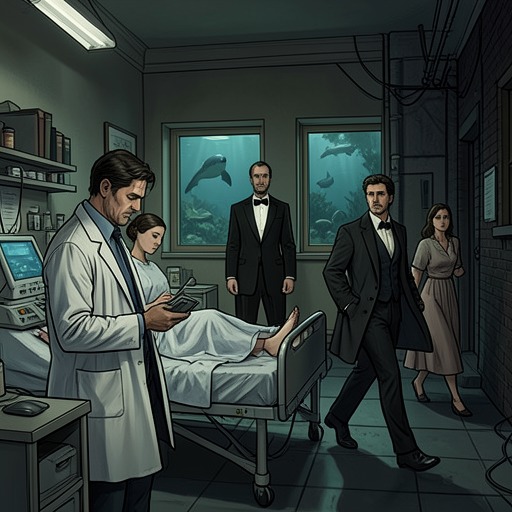
Liver arrives armed and mistakes the scene for a possible murder, forcing Jasper to explain that he has come to disable Hazel’s chip so she can escape her husband. After recognizing the overdose, Liver forces Hazel to vomit and says she will live. Jasper has the syringe, but Liver takes it and injects Hazel in the arm. The physical action is brief and practical, not a procedure explained by medical expertise. Its intended effect is stated afterward: Jasper tells Hazel that the injection should disable the chip in her brain. The rescue therefore depends on a chain of actions—Jasper’s mission, Liver’s intervention, and Hazel’s survival—rather than on the implant being removed or examined.
Downloads, Timing, and Escape
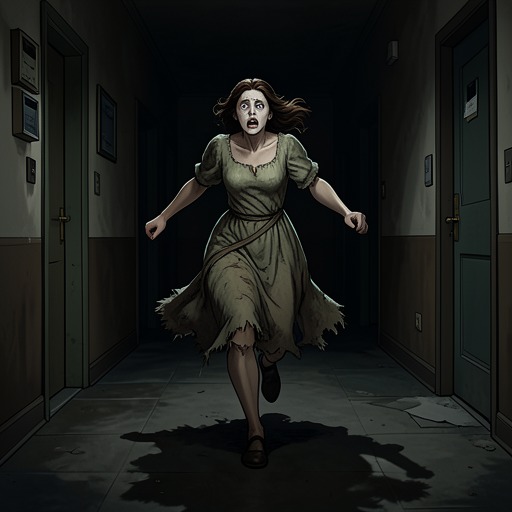
Hazel’s first response is to recognize the danger posed by Byron; Jasper agrees that they must move. He says the rabbit woman warned them to disappear before Hazel’s next download. That warning gives the implant an immediate schedule and turns escape into a race against recurrence. The chip’s threat is not confined to what has already happened to Hazel: unless they get away in time, another download may expose her to renewed control. The passage does not establish the exact interval between downloads, but the later reference to the noon download makes clear that the coming cycle is close enough to shape decisions.
Hazel refuses to leave her father’s body behind. She fears Byron will use his corpse for cryogenic blackmail, and insists that they take it with them. The escape consequently has to accommodate both Hazel’s vulnerability and the burden of the body; Liver agrees to help transport it and says it will need to be iced. The chip’s deactivation does not erase the dangers surrounding Hazel or simplify the departure. Even with the injection administered, the group must leave before the next download while protecting her father’s body from Byron’s use.
The following day, in the car, Hazel recognizes that she and Jasper have not discussed what they will do if the noon download happens. Her own backup plan is to take pills again; she has brought several bottles and considers whether Jasper might join her in that plan. This disclosure shows how little security the attempted deactivation has yet provided. The injection was meant to disable the chip, but Hazel still anticipates a download and has prepared for another suicide attempt. The account does not confirm whether the implant has been successfully deactivated, so the escape remains suspended between the promised intervention and Hazel’s expectation of another crisis.
Narrative Significance
The chip is mostly unseen, but it organizes the action around it. A syringe stands in for a technical explanation: it is the tool Jasper is sent to use, and the decisive physical gesture is Liver’s injection into Hazel’s arm. The implant itself remains inside her head, while its consequences appear as downloads, surveillance, fear of Byron, and a deadline for flight. This contrast makes the technology’s control concrete without presenting it as something the characters can simply inspect or understand.
The object also links Jasper’s attempted moral repair to Hazel’s bodily autonomy. He is recruited to risk himself and given the means to interrupt an intervention imposed on her, but the rescue cannot be declared complete merely because the needle has been used. Hazel’s concern about the next download, and her readiness to return to pills if it occurs, preserve uncertainty about what the injection has accomplished. The chip thus remains both the target of the rescue and the measure of its unresolved stakes: freedom depends not only on the attempt to disable it, but on escaping Byron before control can resume.